Featured Post

Breakdown of Navier-Stokes Equations

Find PDF version here. Abstract: Given limited energy and a small mass density or large kinematic viscosity, this work shows why...

Showing posts with label Newton's constant. Show all posts

Sunday, December 24, 2017

How the Gravitational Constant G Destroys Modern Physics

According to all string theories, the Planck length and Planck time are the smallest units. In fact, the string is considered the smallest bit of matter. That brings us to the proverbial question: How long is a string? A string theorist will tell you it is the Planck length. The equations below show the components of the Planck units:
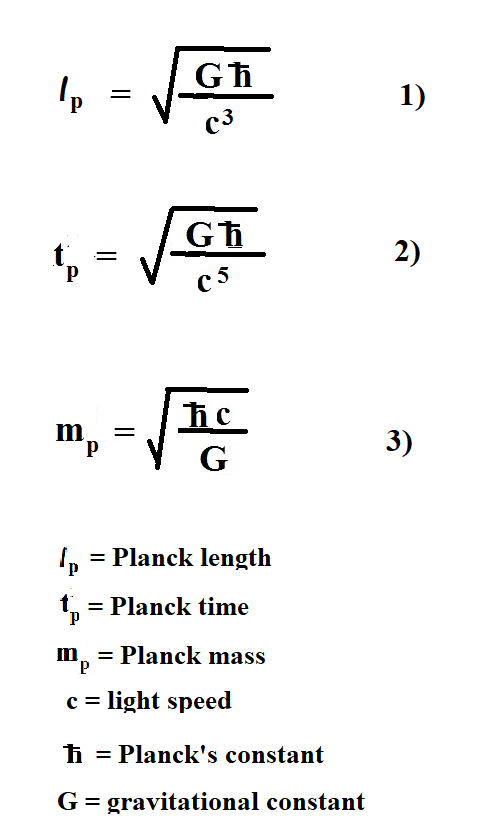
As you can see, the Planck units are made up of the following components: Newton's constant (G), Planck's constant (h-bar) and light speed (c). All these constants are believed to be constant. As long as they are, the Planck units are not just arbitrary units. On the other hand, if one or more of these constants are not always constant ... well that could be a problem.

If we begin with the Lorentz equation, we can derive equation 11 below:

If we assume nothing goes faster than light, then the change in time (delta-t) has an upper limit of t. Also, we know the following is true:

Thus, what follows is also true:

Now, let's assume black holes exist, look what happens when we let radius (r) fall to zero:

The light-speed barrier is broken and energy is no longer conserved. But, then again, if radius r is really small, Heisenberg's uncertainty principle might save the day.

Whoops! Nevermind. A particle, or black hole singularity in this case, can borrow energy from nothing but has to pay it back quickly, in time t. Since the black hole has to borrow more energy than is estimated for the entire universe, it's time is short indeed. The black hole, as we understand it, could not exist. Yet there is a black hole at the center of our galaxy--and it has been there much much longer than time t. How is that possible? Check this out:

If the constant G is allowed to shrink along with radius r, energy is conserved, so the black hole doesn't have to borrow--it can exist as long as it wants. Plus, the light-speed barrier is conserved as well. Unfortunately, the Planck units are arbitrary units. They are not constants of nature.

But does G really shrink? If so, when is it constant and when is it not? If we revisit equation 10, we can derive the following:

Equation 26 shows that delta-t has an upper limit of t but radius r has a lower limit of zero. Since these are components of G, G shrinks to zero as r shrinks to zero. By contrast, equation 27 shows that as r goes to infinity, delta-t goes to zero. As a result, G remains constant. So it appears G is constant at large distances. At small distances, G is no longer constant. For G to be constant at the quantum scale, delta-t needs to grow to infinity as r shrinks to zero. But if that were the case, energy would not be conserved:

Therefore, the gravitational constant G destroys much of modern physics if it remains constant at small scales, and, makes the Planck units arbitrary if it doesn't.

Monday, August 28, 2017

Deriving Newton's Constant G From Quantum Physics

Previously, we did a classical-relativistic derivation of Newton's constant G. Today we will derive it from Schrodinger's equation and Dirac's quantum field equation. Below are the variables we will use:

To derive G from quantum mechanics (which covers low-energy individual particles) we begin with Schrodinger's time-independent equation:

Consider two particles with the same total energy (H), but their potential (V,V') and kinetic (h-bar terms) energies differ. We set their respective Hamiltonians (H,H') equal to each other:

Below we define their respective wave functions:

At equation 6 above we calculated the double derivative of each kinetic-energy term. Below we define the complex conjugate of each wave function. We use these complex-conjugates to find the particles' expectation values (see equation 10):

At equation 11 we equate the particles' kinetic-energy difference with their potential-energy difference. Equation 12 is a quantum-mechanical version of Einstein's field equations: The wave numbers (k,k') have the same units as spacetime curvature.

Equation 15 above is the square of the gravitational velocity (v^2) between the two particles. At equation 16 below it is perfectly legal to multiply the right side by the particles' masses (2m) and the distance (r) between said particles if we also divide by those figures. From there we can derive equation 20.

At equation 20, we can see why Newton's constant (G) is constant. Any change in the mass (m) or distance (r) between the particles causes an offsetting change in the wave-number (k) ratio; i.e., spacetime curvature changes when the distance-mass ratio changes. However, you may have wondered what would happen to G if the two particles had the same wave numbers (and the same potential and kinetic energies). The wave-number difference would be zero (or at some ground state) and so would G!

Quantum field theory to the rescue. From here on, mass (m) shall be the mass (or mass equivalent) of a field within a given volume, not an individual particle. This field could be a vacuum (not necessarily a perfect vacuum) where half-spin particles are created and annihilated. We use Dirac's equation below to assist us:

Below we derive equation 26--the square of the field's energies.

Let's suppose that this field interacts with another field, but this other field contains more mass (m') and a lower average wave number (k'). At 29 below we compare the squared energy differences of these two fields. They may or may not be equal.

Using a similar procedure we once again derive G (see equation 36):

If the two sides of the equation are not equal, we throw in a factor of n to make them so. (If the sides are equal, n = 1.)

Now Newton's constant can be constant even if the two fields have identical masses and wave numbers. A zero difference in wave numbers is offset by a zero difference in mass. (A minimum non-zero ground state also helps G to be constant.) Note that a difference in mass is the mass we measure above a given field mass. For example, when calculating Earth's gravity, the Earth's mass does not include the vacuum field mass (m). However, the total mass (m') includes the Earth and the vacuum field mass (m). Thus the Earth mass is the mass difference or net mass.

Thursday, August 17, 2017

Deriving the Gravitational Constant G

Today we will derive the gravitational constant G, also known as Newton's constant. Here are the variables we will be working with:

Below is a crude diagram of a satellite orbiting a star or planet at velocity v, at a distance of radius r. According to its clock, the proper time is t'. The star or planet has a mass of m.

Our starting point shall be the Lorentz equation, courtesy of Einstein's theory of special relativity:

By doing some algebra we can derive equation 7 below:

Equation 7's right side expresses v^2 in terms c^2 and a time ratio. The bigger the time ratio, the faster the velocity and vice versa.

We manipulate Einstein's energy equation to get equation 8:

We make a substitution, then do some more algebra until we derive G at equation 15:

We can now see why G is the constant it is: Any change in velocity (v^2) is offset by a change of the radius-mass ratio. Any change in radius-mass ratio is offset by a change in the time ratio.

Update: Here we relativize G and make use of the velocity addition formula so Gm/r will always be no more than the speed of light squared: