Featured Post

Breakdown of Navier-Stokes Equations

Find PDF version here. Abstract: Given limited energy and a small mass density or large kinematic viscosity, this work shows why...

Showing posts with label light speed. Show all posts

Sunday, December 24, 2017

How the Gravitational Constant G Destroys Modern Physics

According to all string theories, the Planck length and Planck time are the smallest units. In fact, the string is considered the smallest bit of matter. That brings us to the proverbial question: How long is a string? A string theorist will tell you it is the Planck length. The equations below show the components of the Planck units:
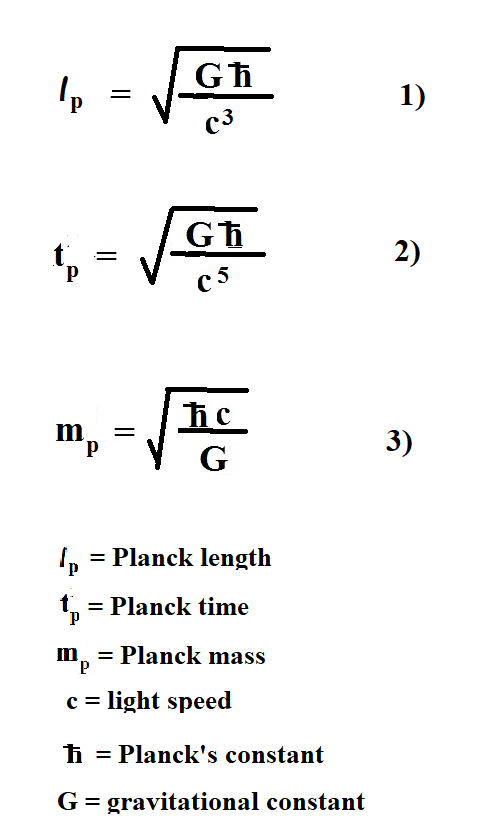
As you can see, the Planck units are made up of the following components: Newton's constant (G), Planck's constant (h-bar) and light speed (c). All these constants are believed to be constant. As long as they are, the Planck units are not just arbitrary units. On the other hand, if one or more of these constants are not always constant ... well that could be a problem.

If we begin with the Lorentz equation, we can derive equation 11 below:

If we assume nothing goes faster than light, then the change in time (delta-t) has an upper limit of t. Also, we know the following is true:

Thus, what follows is also true:

Now, let's assume black holes exist, look what happens when we let radius (r) fall to zero:

The light-speed barrier is broken and energy is no longer conserved. But, then again, if radius r is really small, Heisenberg's uncertainty principle might save the day.

Whoops! Nevermind. A particle, or black hole singularity in this case, can borrow energy from nothing but has to pay it back quickly, in time t. Since the black hole has to borrow more energy than is estimated for the entire universe, it's time is short indeed. The black hole, as we understand it, could not exist. Yet there is a black hole at the center of our galaxy--and it has been there much much longer than time t. How is that possible? Check this out:

If the constant G is allowed to shrink along with radius r, energy is conserved, so the black hole doesn't have to borrow--it can exist as long as it wants. Plus, the light-speed barrier is conserved as well. Unfortunately, the Planck units are arbitrary units. They are not constants of nature.

But does G really shrink? If so, when is it constant and when is it not? If we revisit equation 10, we can derive the following:

Equation 26 shows that delta-t has an upper limit of t but radius r has a lower limit of zero. Since these are components of G, G shrinks to zero as r shrinks to zero. By contrast, equation 27 shows that as r goes to infinity, delta-t goes to zero. As a result, G remains constant. So it appears G is constant at large distances. At small distances, G is no longer constant. For G to be constant at the quantum scale, delta-t needs to grow to infinity as r shrinks to zero. But if that were the case, energy would not be conserved:

Therefore, the gravitational constant G destroys much of modern physics if it remains constant at small scales, and, makes the Planck units arbitrary if it doesn't.

Saturday, September 16, 2017

Gravity is Weak Because of Light Speed

According to the above video, gravity lives outside our universe in a higher dimension or parallel universe. It then leaks into our universe. By the time it gets to us, it has a weak signal. However, using extra dimensions and universes to explain what we don't understand only increases the overall mystery. It also increases the burden of proof of the scientists who postulate such a hypothesis. Surely higher dimensions and parallel universes are more poorly understood than the gravity we can actually observe and measure. For these reasons, they make a poor hypothesis.

Today we are going to explain the weakness of gravity using what we already know. First we define the variables we will be using:

Time for a thought experiment. Imagine a cubic section of our universe. Divide this cube into two halves: A and B. A and B contain a vacuum with a few photons whizzing around with momentum p. A and B each have fairly equal numbers of these photons.

From another part of our universe we take mass m and add it to section B:

At equation 1 above we add section B's momentum and mass energies. It's obvious that A's total energy is less than section B's (see inequality 2 below):

Now, look what happens when we divide both sides by p^2:

Number 3 above is an absurdity. How can light speed (c^2) be less than another speed? According to Einstein, light speed is the maximum speed limit in our universe. Maxwell showed mathematically that light is an electromagnetic wave. The speed of light is a function of the permittivity and permeability of free space. Since these values are constant, light speed is also constant in a vacuum.

To date, no particles have been discovered that can exceed the speed of light. But is light speed really the top speed? The inequality at 3 suggests otherwise. Here's why we currently believe nothing goes faster than light in a vacuum. Below is a Minkowski-ish spacetime diagram.

Velocity vector A is at rest; it is moving through time (t'), so its velocity is zero (see equation 3b). B is moving through both time and space, so its velocity is greater than zero (see 3c). C is moving through space only. It's proper time (t') is zero and its velocity ... are you ready for this? ... is infinite (see 3d).

Of course this infinite speed is from the photon's point of view. We calculate what an observer sees at 3e above. At 3f, we assert that light speed is infinite speed if proper time is used. Can't beat infinity, therefore light speed is the top speed.

Since light speed is the top speed, the inequality at 3 is wrong. Equation 4 below makes better sense:

Notice we simply included a reduction factor of epsilon^2. What can we learn from this? We learn that the full energy of section B does not come into play. It is weakened by the fact that nothing can go faster than light. To restore equilibrium completely, let's multiply the left side by a time-dilation ratio. (To see how this ratio was derived, click here.)

From equation 5 we can derive equation 7 below (Newtonian gravity). Equation 9 reveals the nature of the reduction factor.

Equation 9 tells us that gravity is weak due to time dilation and the ratio of section A momentum to section B momentum. In particular, gravity is weak because momentum p is weak. Why is p so weak? It's the momentum you find in the vacuum of space (with a few photons thrown in). Where there is low vacuum energy there is weak gravity.